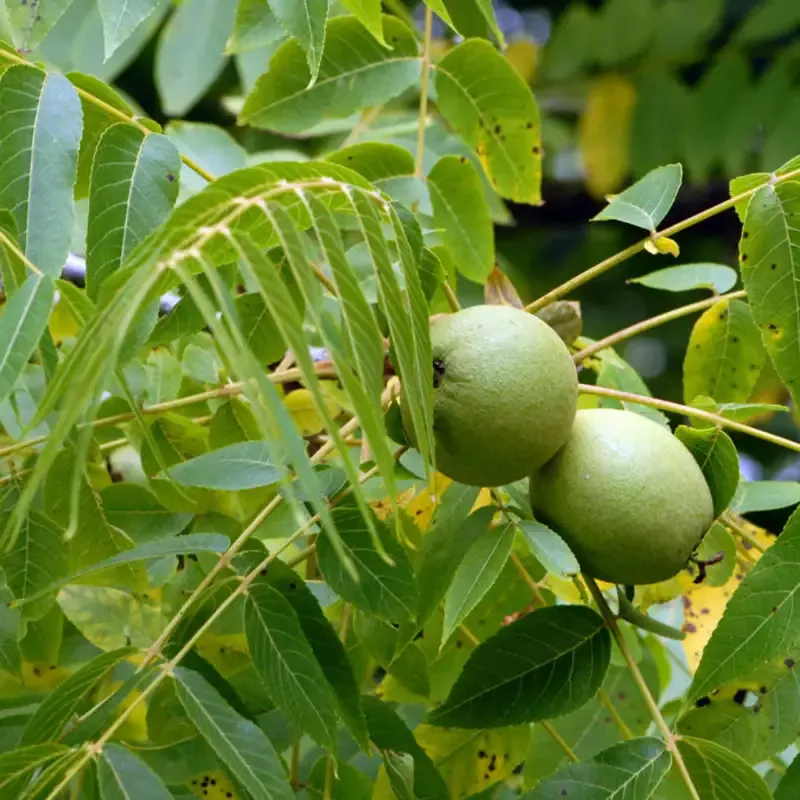
Beautiful Black Walnut (Juglans nigra)
The Black Walnut is a stately, long-lived tree admired for its high-quality hardwood and nutrient-packed, round walnuts. Native to North America, it has been cherished for centuries as both a food source and a timber tree.
In addition to producing delicious, richly flavored nuts, the Black Walnut tree adds elegance and shade to large landscapes. Its nuts are excellent for baking, candies, and healthy snacks, while the wood is prized for furniture and fine woodworking.
- � Large, stately shade tree
- � Produces edible round walnuts with rich flavor
- � Highly valuable hardwood for furniture & crafts
- � Thrives in full sun with well-drained soil
- � Mature Size: 50–75 ft. tall, 50–60 ft. wide
- � Ideal for orchards, homesteads & large landscapes
Note: Black Walnut produces a chemical called juglone that may affect some nearby plants (like tomatoes). Best planted in open spaces away from sensitive crops.
Growing Zones: 4–9 outdoors
| Mature Height: | 50–75 ft. |
| Sunlight: | Full Sun |
| Mature Width: | 50–60 ft. |
| Botanical Name: | Juglans nigra |
| Growth Rate: | Moderate |
| Nut Harvest: | Fall |
| Type: | Deciduous Hardwood Tree |
FAQ’s
What makes Black Walnut nuts special
They have a stronger, richer flavor than English walnuts, making them prized in baking, desserts, and savory dishes.
How big does a Black Walnut tree get
It can reach 50–75 feet tall with a broad canopy up to 60 feet wide, providing excellent shade.
Do I need more than one tree for nut production
Black Walnuts are self-fertile, but planting more than one tree can increase yields.
Can I plant Black Walnut near a garden
It’s best to plant them away from vegetable gardens, as juglone in their roots can affect sensitive plants like tomatoes and peppers.
Is the wood valuable
Yes, Black Walnut wood is among the most prized hardwoods, used for furniture, cabinetry, and fine woodworking.
| Size |
1 Gallon, 2 Gallon, 3 Gallon, 5 Gallon |
|---|