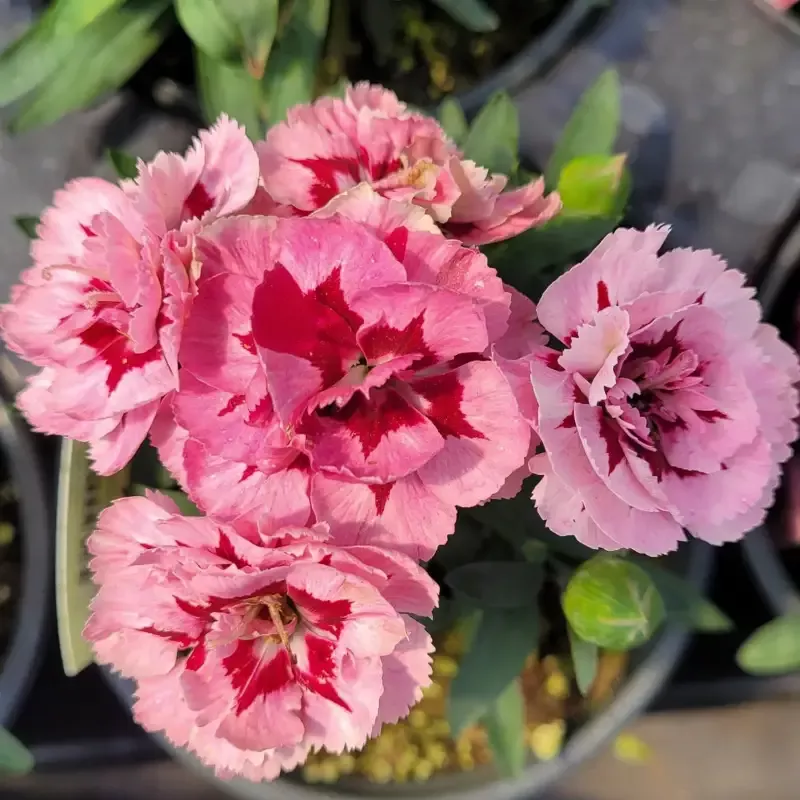
DIANTHUS OSCAR ‘PURPLE STAR’ – FRAGRANT & VIBRANT! A stunning low-growing perennial with purple-pink double blooms and a red star center. Ideal for sunny borders, containers, and cut flower gardens!
- Striking purple-pink double flowers with a bold red center.
- Mounded habit with gray-green foliage.
- Fragrant blooms in spring through early summer.
- Deer resistant and pollinator-friendly.
- Hardy in zones 5–9.
- Height: 8–10 inches; Spread: 6–10 inches.
Shipped safely in its container to prevent damage during transit. Expect seasonal dormancy in colder months—plants will flush out again in spring.
We cannot ship this item to California due to agricultural regulations.
Growing Zones: 5–9
| Mature Height: | 8 to 10 Inches |
| Sunlight: | Full Sun |
| Spread: | 6 to 10 Inches |
| Botanical Name: | Dianthus Oscar ‘Purple Star’ |
| Growth Rate: | Moderate |
FAQ’s
Is Dianthus Oscar ‘Purple Star’ a perennial or annual
Dianthus Oscar ‘Purple Star’ is a perennial in USDA zones 5–9. In colder climates, it may be grown as an annual or overwintered indoors.
What light conditions does this Dianthus prefer
It thrives best in full sun, needing at least 6 hours of direct sunlight daily for lush blooming and healthy foliage.
When does ‘Purple Star’ bloom
It typically blooms in spring and early summer. In mild climates, it may produce flowers again in fall if pruned lightly.
What kind of soil is best for Dianthus
Dianthus prefers well-drained, neutral to slightly alkaline soil. Avoid wet or heavy clay soil, as poor drainage can lead to root rot.
How do I care for this plant after planting
Water regularly during the first few weeks. After establishment, only water when the top inch of soil feels dry. Remove faded blooms to encourage more flowers.
How fast does Dianthus Oscar ‘Purple Star’ grow
It has a moderate growth rate and typically reaches its mature size in the first or second growing season with proper care.
Can I plant it near walls or patios
Yes, this Dianthus makes a great edge plant for patios, walkways, and garden beds, thanks to its compact size and mounding form.
Is it native or adapted for North America
Dianthus species are originally native to Europe and Asia but are widely adapted for garden use across North America due to their hardiness and ease of care.
What pests or diseases affect this plant
Watch for aphids, spider mites, and fungal leaf spots. Ensure good air circulation and avoid overhead watering to reduce issues.
![Grass: Festuca glauca Blue Fescue – [EG]](https://www.hotgardendirect.com/wp-content/uploads/2026/09/grass-festuca-glauca-blue-fescue-eg.webp)