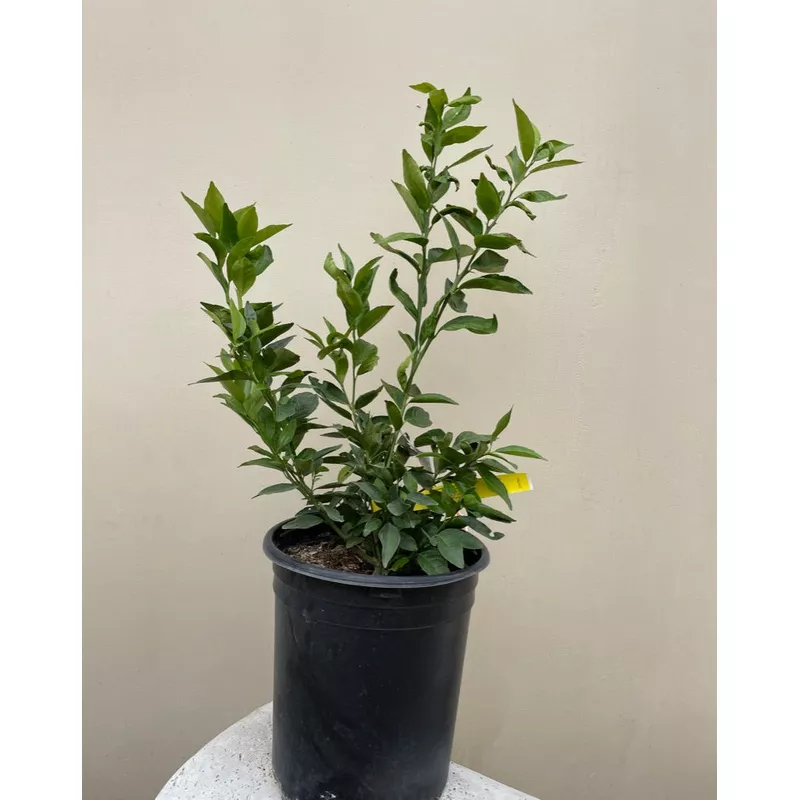
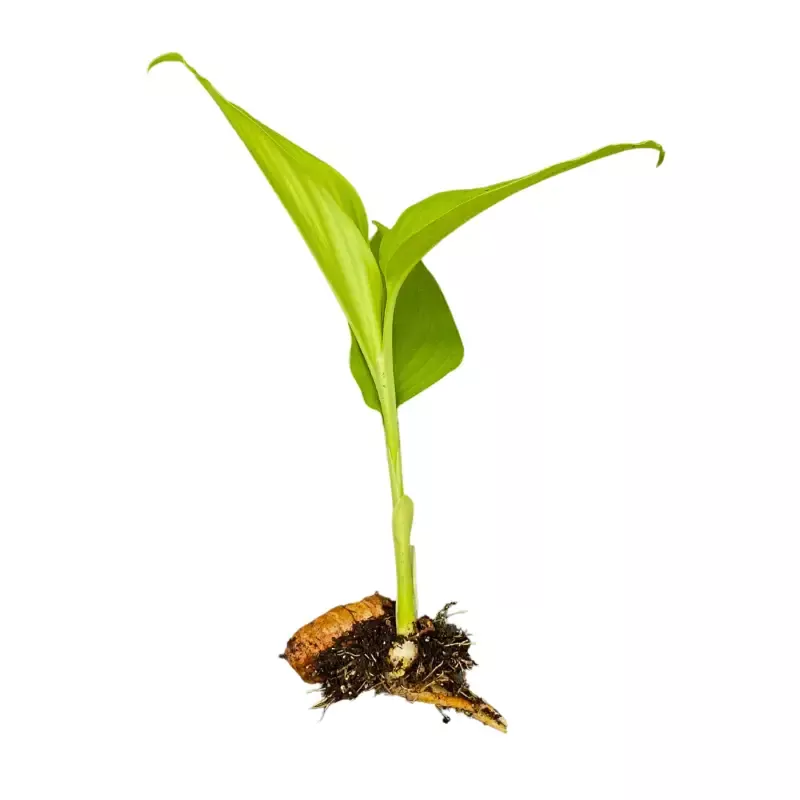
Our turmeric plants are grown in our greenhouse from turmeric rhizomes harvested on our farm. This is a standard orange turmeric variety that consistently provides solid yields for us each year. It can be grown in an in-ground garden, raised bed, container, or even an indoor pot. Turmeric plants can get 4-5′ tall, so account for that if growing in containers.
Turmeric prefers well-drained soil and should not be planted in an area where water regularly pools after a heavy rain. If your soil doesn’t drain well, consider adding a significant amount of compost prior to planting. A 6-8″ plant spacing is usually sufficient, although you can give them more space.
Once you have an established container or plot of turmeric, you can save rhizomes each year to replant the following year. You can also leave the rhizomes in the ground and they will sprout the following year when temperatures warm. We’ve found that turmeric planted in the ground doesn’t usually sprout until late June or early July when soil temperatures warm significantly.
Will It Grow in Your Zone
Turmeric is a warm-season plant with tropical origins in India. In zones 8 and warmer, it can be grown in the ground with no issues. It does require a long warm growing season for substantial production. In zones 7 and north, you’ll want to plant turmeric in indoor pots and move outside when the risk of frost has passed.
Although turmeric is a heat-loving plant, we’ve found that it can benefit from some partial shade. In our intense south Georgia heat, we utilize shade cloth to keep the leaves from folding as much during the day. This creates less stress on the plants and promotes more growth throughout the warm season.