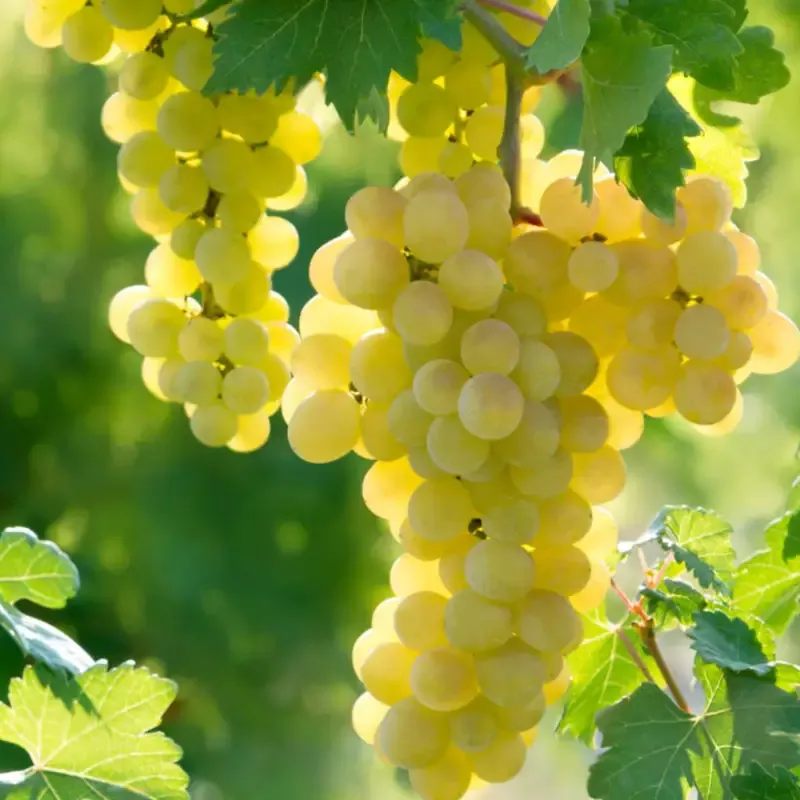
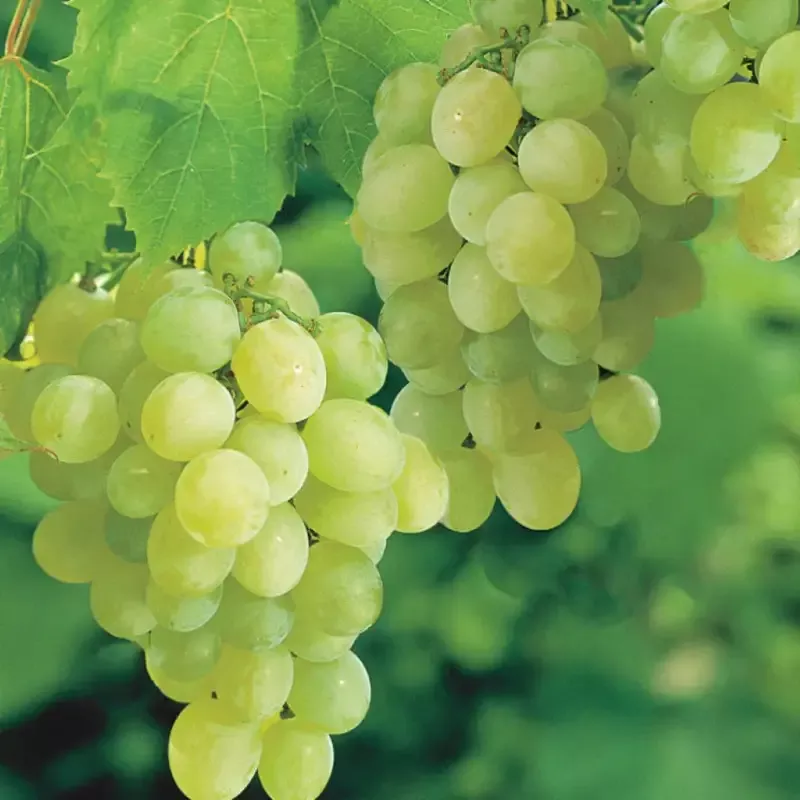
Thompson Seedless Grapes are the most popular white grape variety, prized for their sweet, crisp flavor and seedless convenience. Perfect for fresh eating, drying into raisins, or juicing—these vines are a garden favorite!
Thompson Seedless White Grapes – Sweet, Crisp & Versatile
Thompson Seedless Grapes (Vitis vinifera ‘Thompson’) are a classic white grape variety known for producing large clusters of green, seedless grapes with a sweet, refreshing flavor. They’re perfect for snacking, making raisins, or blending into juice and wine.
Also Known As (AKA):
- White Seedless Grape
- Green Grape
- Sultana Grape
- Table Grape
This vigorous, fast-growing vine thrives in full sun and produces abundantly when trained on trellises or fences. It’s self-pollinating, drought-tolerant once established, and a reliable favorite in home orchards across the country.
- � Seedless, sweet green grapes
- � Fast-growing and productive vine
- � Thrives in full sun
- � Perfect for fresh eating, raisins, and juice
- � Self-pollinating and easy to grow
Landscape Tip: Train over arbors or pergolas for a lush, fruit-filled garden structure.
Growing Zones: 6–9 outdoors
| Mature Height: | 10–20 ft. (with support) |
| Mature Width: | 6–10 ft. |
| Sunlight: | Full Sun |
| Botanical Name: | Vitis vinifera ‘Thompson’ |
| Growth Rate: | Fast |
| Type: | Fruit Vine |
| Harvest Time: | Late Summer |
| Pollination: | Self-Pollinating |
FAQ’s
Are Thompson Seedless grapes self-pollinating
Yes, they are self-pollinating and do not require a second plant to produce fruit.
Do they need full sun
Yes, full sun ensures the sweetest grapes and healthiest vine growth.
When can I harvest the grapes
Thompson grapes are usually ready for harvest in late summer, typically August through early September.
What is the best support system
Use a trellis, arbor, or fence to provide vertical support and better air circulation.
Do they require pruning
Yes, prune annually in winter while dormant to maintain shape and improve fruit yield.